viernes, 11 de octubre de 2019


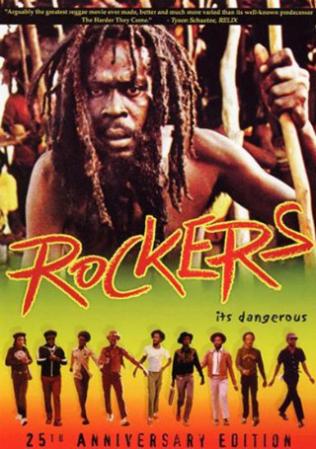
"Rockers" (1978)

Drama/Action

Directed by Theodoros Bafaloukos


1. How does the main character, Leroy "Horsemouth" Wallace, compare to the other main characters (Ivan Martin and Derrick Thompson) in the first two films we saw?


All the characters are completely different to each other in the different movies, and that is not because their age, social stratum, culture or etc. It's because the premise of this movie last movie is different from Ghett'a life or The harder they come. In this movies the main characters were people with very specific conditions and individual goals that made them special and stand out from the other characters from the movies. Their goals were personal and they had to go thru a lot of obstacles enduring violence to achieve them.
Rockers represent the ideology of Rastafari, the importance of the community and the fall of those in power. So the construction of this character, Leroy "Horsemouth", it's done from his communication, behavior and actions in the community and their shared goal. Leroy could be anyone in real life, he hasn't a special condition, like be son of some important politician or be a sociopath serial killer, he is just a man of the community with leading capabilities with a shared goal. 

2. Did you like or dislike the film? Why/Why Not?

I really liked this movie because of the formal operations in it, make this movie unique and super fun to watch. The script is simple but the premise it's powerful, and all the elements in the movie construct a super plausible fictitious world that is nice to watch. It doesn't pursuit a Hollywood style, instead looks almost like a documentary and it's super sensitive about the details of the location and the interaction of characters in it. Making this movie a sensitive experience meanwhile the plot goes by. 
The first element that separate this movie from any other fiction is in the beginning, when the rasta man speaks directly to the camera about the tenets of the Rastafari movement and how the see violence, power and love. This happen a second time in middle of the movie after Leroy suffers violence and he speaks again to the spectators about these principles and why rastas prefer peace and avoid violence.  
This particular scenes coupled with the photography work in the movie, makes it look super realistic. The camera most of the time take some distance from the characters, and take long shots without cuts, allowing the spectators to appreciate the relation of space and time of the characters and the places were they unfold and take action. 
Uses mostly wide and close shots with little movement, making images full of textures, colors and depth of field that accompanied with a fine direction of art with a careful choice of props and colors, creates some rich and powerful images full of meaning.
Sometimes uses steady cams with long shots to follow Leroy in complex spaces full of people and interactions of all types, that allows spectators to feel like they are actually in the movie living the experiences with the characters. 
The movie uses a lot of reggae music and direct sound, sometimes the dialogues get lost in all the ambient noise, and that's okay, because since the beginning the movie propose this code of realism that's super easy to catch. 
All i wanna say here is that the movie is so well constructed and all is made to exalt the premise of Rastafari principles, and the context of poorness and community where this happens. Works really well.

3. In conclusion to our Jamaican film unit, which was your favorite film of all 3? Why?


Rockers is exactly my taste of movie and i really liked it, and not just for that, also because i think is the most honest movie of all three showing us the identity of Jamaican and Rastafari culture.
I don't like those movies where one character is a hero and does everything. In the reality changes occur in community like a group action, and that requires culture, ideology, organization and planning. 
This movie show us all really well the reality that Jamaicans lived and how important Rastafari tenets were in the social relations and organization. So Rockers was my favorite in all of this aspects, including the technical ones that made this movie a whole different experience than the other one that we have seen before.   

lunes, 23 de septiembre de 2019

"Ghett'a Life" film review


"Ghett'a Life" (2011)

Drama/action

Directed by Chris Browne


1. Who was your favorite character (s) from the film? Why?


My favorite characters of the film were Derrick and his mom Dawn Thompson. Derrick it's a well developed character that had to face very complex problems to accomplish his objective, win the championship of boxing. In this process Derrick lives a transformation from being a simple kid to a professional boxing athlete involved in a violent geopolitical conflict. This transformation is caused in its majority by a situational conflict, because Derrick is son of a politician that's friend of a gangster. He's enemy of the gang that lives in the hood where the boxing gym is. So Derrick is involved in a world with gang-ruled politics. 

Dawn Thompson is the most important female character in the movie. She helps Derrick to pursuit his dream, and fights for him with his husband that disagree with Derrick interest in boxing, and hides Derrick from the gang that wants to kill him. She is a great mother, that always supports his son and is super proud of him. Also, the big spin of the movie happens when the gang shots Dawn and Derrick, super angry, "trys" to kill the gang. 

2. How do we see the political conflict portrayed in the film?


The principal device used to show the political conflict in the movie is the TV. In the news the characters and the spectators can see the conflict between People's National Party (PNP) and the Jamaican Labour Party (JLP). We can hear the people claims about violence, crime and their demands on a violent neoliberal context.

In the reality of the movie, we are spectators of gang-ruled Jamaican politics and their violent concecuences. In this world this presented as a territory in conflict, divided by gangs and patrolled by the army. 

3. How are woman portrayed in this film? Is it a little or big advancement compared to The Harder They Come?

I think that this movie has a good advancement about the roll of the woman in society from the movie The Harder They come. In that movie, all the important characters were men and they were the only ones that had voice. In Ghett'a Life, Dawn is super important in the story of the movie, as it's role in society and as a mom. 

The movie is still being in a male chauvinist Jamaica, but in this case, Dawn make important decisions that affect the hole spin of the movie and the principal character. She even argue agaist his husband making him shut up, all trying to protect his son. By the other side, Carmella that's like the lover of Derrick, falls in the typical estereotipe as the lover of the protagonist. But she is important in the argument, because she is who convinced the coach to accept Derrick at the gym and that lead to all the events that happend after. 

jueves, 5 de septiembre de 2019

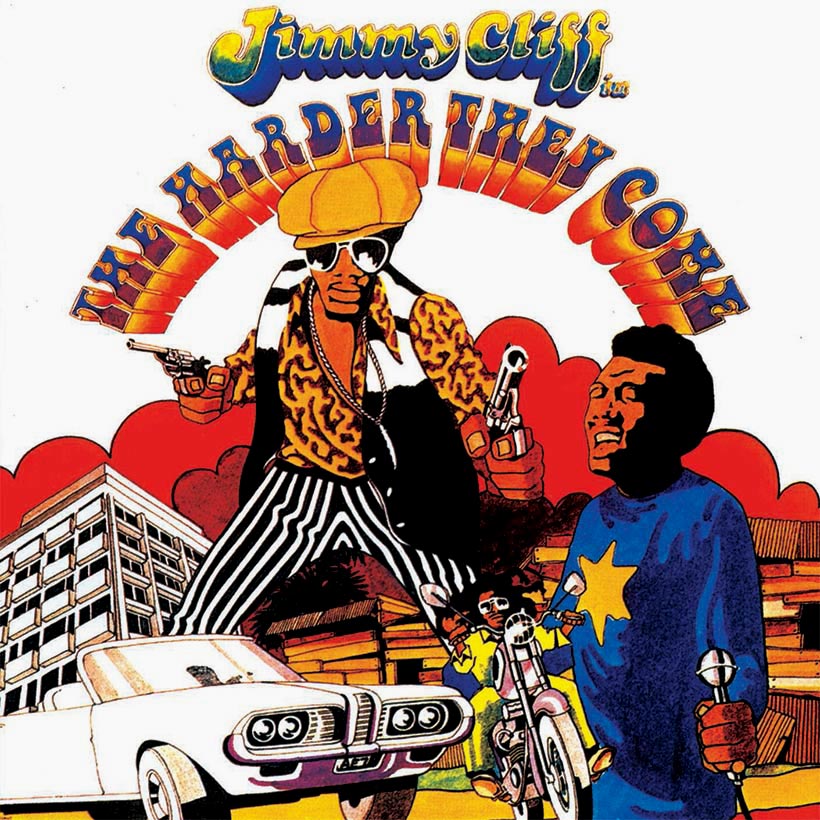
The Harder They Come Review

"The Harder They Come" (1972)
Drama/crime film
Directed by Perry Henzell

1. In general, what did you like and dislike about the film?

I liked the story of the movie, it’s full of action and drama that makes it fun to
watch and doesn't get boring. What makes it interesting are the decisions that
the protagonist (Ivanhoe Martin) takes, in the beginning is a little weird how he
turns into a criminal with aggressive and illogical actions, but it becomes a code
on the construction of the character with the repetition of those actions, making
him a really complex character, full of motivations well presented in at the
beginning of the movie, like the poorness in the context where he lived, bad
treatment between people, violence, etcetera.
I didn’t like the way of how the movie was made, i'm mean the montage and
cinematography. Direction of Art did a great job making the scenography of the
movie and creating a palette with the primary colors. That helps with the continuity
of the movie that has some serious problems with raccord. Cinematography isn’t
constant at all in the whole movie, exploring different ways of filming like using
camera on hands or using movements on tripod really different to each other,
combined with a montage that make hard cuts between scenes. This makes it
difficult for viewers to continue on the fiction of the movie due to jump cuts. 

2. Who is your favorite character from the film?

I don’t have any favorite character, the protagonist was erratic and violent, making
it hard to empathize with him. He killed a lot of people, even a woman and didn't
go to jail, that really pissed me off. But, he is well constructed, we can understand
what his motivations are due to the living conditions that he had, his social context
of violence and crime, the bad treatment and injustice that the music records gave
to artist that were trying to succeed in the middle of very poor socioeconomic
conditions.

3. Would you recommend this film to someone, why/why not?

I found this movie to be really good, better than what I expected. I know that I
criticized the technical problems that it has, but the story and the content in it like
music, makes it really interesting and important to his era. We can see a lot of Rastafari
and reggae influences on it, and this is the movie that make this topics expand on the
UU.EE. and the world. So i consider important this movie because it allows us to
understand the culture of Jamaica in those times after British colonist went out of the
country, and show us the influence of reggae in Jamaica in this process of
reconstruction. Also it’s really fun to see, so I would recommend this movie to anyone. 

4. How does this film contribute to postcolonial identity?

When a country breaks in a new era of new politics and changes in socio-economical
conditions of living, the culture get complex and starts to develop and grow up. This
movie present us the world that Jamaicans lived and criticize the bad living conditions
that people had to deal after the British colonies left Jamaica. At the same time, with
reggae music this movie present the aspirations of society to emerge and improve their
living conditions and social relationships. Reggae becomes the main cultural movement
in post colonial times, and it has influenced till the present day in Jamaica and the rest
of the world.